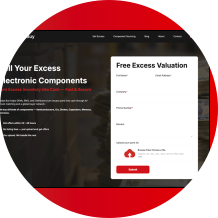
Sell Electronic Components Online: Where OEMs & EMS Companies Can Sell Excess Stock

Excess electronic components are a normal part of manufacturing. An OEM may have parts left after a customer changes a forecast. An EMS provider may hold unused stock after a production run is cancelled. A distributor may have slow-moving inventory that no longer matches current demand.
The parts may still be new, usable, and valuable. The challenge is choosing the right selling channel. Some options give you exposure but require more work. Others move faster but depend on buyer demand. For large mixed stock lists, the best solution is usually the one that helps you find real demand without asking your team to manage every part one by one.
This guide is written for OEMs, EMS companies, and distributors that want to sell electronic components online, recover value from excess inventory, and reduce the internal work involved in finding buyers.
Why Companies End Up with Excess Electronic Components
Even well-managed supply chains can produce excess inventory. Electronics teams often purchase parts months in advance to secure supply, meet production schedules, or reduce lead-time risk. When the plan changes, the materials remain.
External changes are a common cause. A customer may cancel an order, delay a launch, or change product requirements. A project may stop before all purchased materials are used. A technology upgrade or product revision may also make certain components unnecessary for future builds.
Internal planning can create surplus stock as well. A purchasing team may buy extra components because of MOQ requirements, long lead times, or previous shortage experience. Sales forecasts and production plans may not fully align. Engineering builds, pilot runs, and sample production can also leave behind usable parts that never move into mass production.
The key is to review the stock early, while the parts are still easier to evaluate and match with demand.

Why Selling Excess Electronic Components Matters
Excess stock is easy to ignore when it is sitting on a warehouse shelf. Over time, however, it can create real business costs.
Idle inventory ties up working capital that could be used for active production, new sourcing needs, or urgent procurement. It also adds workload for warehouse and inventory teams, especially when there are many mixed part numbers across different brands, packages, and date codes.
Timing also matters. Some components remain in demand for years, while others lose buyer interest as date codes age, product lifecycles change, or market demand shifts. Selling surplus electronic components helps companies clear warehouse space, improve inventory turnover, and convert unused materials back into cash.
If your company is ready to sell excess electronic components, preparing a clean stock list is the fastest way to start the review process.
What Types of Electronic Components Can Be Sold?
Before choosing a selling channel, confirm whether your inventory matches what professional buyers usually review.
Vadas Buy focuses on unused electronic components such as integrated circuits, FPGAs, microprocessors, flash memory, wireless modules, LEDs, LCDs, capacitors, transistors, diodes, connectors, and sensors. These categories are commonly found in OEM, EMS, and distributor excess stock lists.
Some items are usually not a good fit for component recovery programs, including circuit breakers, motors, screens or displays, cables and wires, used or refurbished parts, complete PCBAs, keyboards, mice, TVs, monitors, and boards.
If your list contains a mix of marketable components and non-core items, separate them before submission so the right line items can be reviewed first.
What to Prepare Before Selling Electronic Components
A clean stock list is the fastest way to start the review process. It helps buyers identify demand, check resale potential, and respond without repeated back-and-forth questions.
A useful stock list should include:
- Part number or MPN
- Manufacturer
- Quantity
- Date code
- Package type
- Condition
- Original packaging status
- Target price, if available
- Photos of labels or packaging, when needed
Part number and manufacturer are the most important fields. Many components look similar but have different specifications, package types, or grades. Quantity helps buyers understand whether the stock matches current demand. Date code, packaging, and condition help determine whether the parts are suitable for resale, inspection, or further evaluation.
If the parts are sealed in original packaging, mention it clearly. If packaging has been opened, mixed, relabeled, or stored for a long time, include that information upfront.
For larger inventories, use a spreadsheet instead of a message or PDF. A clear Excel file allows buyers to review line items, identify demand, and respond faster.
For a more detailed checklist, read our guide on how to prepare an electronic components stock list before selling.
Who Buys Excess Electronic Components?
There are several types of buyers for surplus electronic components. The right option depends on your inventory size, part types, and timeline.
Professional excess inventory buyers and recovery platforms are often the best fit for OEMs, EMS companies, and distributors with mixed or high-volume stock lists. They can review many line items at once and evaluate parts based on current demand, manufacturer, date code, packaging, and condition.
Electronic component distributors may buy certain parts if they match existing customer demand. Brokers and independent traders may move specific high-demand parts quickly, but sellers should pay close attention to credibility, payment terms, and inspection requirements.
Online marketplaces can also be an option. They may give your inventory more exposure, but they usually require more work: creating listings, answering inquiries, updating availability, negotiating with buyers, and managing the process over time.
For a company with a large stock list, the most efficient route is usually a channel that can review the full inventory and connect it with real buyer demand without asking your team to manage every item separately.
Where to Sell Electronic Components
There is no single best channel for every seller. The best place to sell electronic components depends on your goal: speed, price, workload, control, or long-term recovery.
| Selling Channel | Best For | Advantages | Limitations |
|---|---|---|---|
| Excess inventory buyer or recovery platform | OEM, EMS, and distributor stock lists | Direct review, less internal workload, faster quotation | Offer depends on current market demand |
| Online marketplace | Small batches of active parts | Wider exposure to potential buyers | Requires listing management and ongoing communication |
| Brokers or independent buyers | Specific high-demand line items | Flexible and sometimes fast | Buyer reliability and payment terms vary |
| Direct OEM or EMS sales | Existing buyer relationships | Potentially strong value for matched demand | Hard to scale without a buyer network |
| Consignment or recovery program | Large inventories that can be sold over time | May recover value from more line items | Usually slower than a direct quote |
| Recycling or liquidation | Unsellable or non-marketable stock | Clears space quickly | Usually offers the lowest recovery value |
Option 1: Use an Excess Inventory Buyer or Recovery Platform
This is often the most practical option for OEMs, EMS companies, and distributors that want to recover value from unused stock without listing each part individually.
This route works especially well for mixed inventories. If your stock list includes many part numbers, brands, and quantities, a professional recovery channel can review the list as a whole and identify which items may have resale demand.
Option 2: Sell Through an Online Marketplace
Marketplaces can be useful when you have active, recognizable parts that buyers are already searching for. They may work well for smaller quantities or standard components with steady demand.
The downside is time. Marketplace selling often requires listing management, buyer communication, price negotiation, and ongoing updates. It may also involve platform fees or delays before the right buyer appears.
Option 3: Sell to Brokers or Independent Buyers
Brokers and independent buyers can be helpful when you have specific parts that are currently in demand. They may respond quickly and show flexibility on certain line items.
However, sellers should review the buyer carefully. Payment timing, inspection process, shipping responsibility, and return terms should be clear before any transaction moves forward. A high offer is not always the best offer if the process is unclear.
Option 4: Sell Directly to Other OEMs or EMS Companies
Direct selling can work when you already know another manufacturer, EMS provider, or distributor that needs the exact parts you hold. In some cases, this can lead to strong recovery value because the parts match an active requirement.
The challenge is reach. Most companies do not have the time or network to contact enough qualified buyers for hundreds or thousands of line items. Direct selling may work for a few valuable parts, but it is difficult to scale across a mixed excess inventory list.
Option 5: Use Consignment or Inventory Recovery Programs
Consignment and recovery programs can be useful when a seller is not in a rush and wants to test the market over time. This model may help recover value from more line items, but it is usually slower than a direct quotation model.
Option 6: Recycle or Liquidate Unsellable Stock
Recycling or liquidation should usually be considered a last resort for components that have little resale demand, unclear traceability, damaged condition, or limited commercial value.
This option can help clear space, but it typically produces a lower return than selling usable components to a qualified buyer. Marketable components should be reviewed separately before they are treated as scrap.
Which Selling Channel Should You Choose?
Use your inventory profile to decide which channel makes sense.
If you have a small number of active, easy-to-identify parts, an online marketplace or existing buyer relationship may be enough. This works best when your team has time to manage listings, answer inquiries, and negotiate with buyers one by one.
If you have several high-demand line items, a broker may help you move those specific parts quickly. This can be useful for shortage-driven components, but it may not solve the problem of a large mixed inventory.
If your company has hundreds or thousands of line items from cancelled projects, over-purchasing, MOQ surplus, or slow-moving production stock, a professional recovery channel is usually more efficient. You can submit one organized stock list, receive a structured review, and avoid managing each part as a separate sale.
If speed matters, direct quotation is usually better than consignment. If maximum long-term recovery is more important than timing, a recovery or consignment program may be worth considering. For unusable, damaged, or non-marketable stock, recycling may be the practical final step.
How to Choose the Right Electronic Components Recovery Partner
When selling excess components, price matters. But it should not be the only factor.
A reliable recovery partner should understand OEM and EMS inventory, including cancelled project materials, obsolete stock, MOQ surplus, and slow-moving components. They should be able to review a complete stock list and explain what information is needed before quoting.
Clear communication is important. You should know how the evaluation works, which factors affect pricing, and what happens after an offer is accepted. Part number, manufacturer, quantity, date code, packaging, and condition can all influence the final value.
You should also understand the cost structure. Some channels may involve listing fees, commissions, or long selling cycles. A direct quotation model can be easier for companies that want a simpler process and faster decision-making.
Inspection, payment, and logistics should be clear before any transaction moves forward. For international transactions, experience with cross-border logistics can make the process much smoother.
The right partner should help your team reduce complexity, not add another project to manage.
What Makes an Electronic Components Recovery Partner Reliable?
A strong recovery partner is not just someone who can make an offer. For B2B sellers, reliability depends on buyer network strength, transaction experience, quality control, and risk management.
Look for a partner with access to verified downstream demand. A large buyer network can improve the chances of matching your excess stock with real market needs. Transaction history also matters because it shows whether the company has experience handling component recovery at scale.
Quality management is another key signal. An ISO-certified quality system shows that the company has structured processes for quality control and documentation. ERAI membership can also indicate stronger awareness of supply chain risk and counterfeit prevention in the electronic components market.
Insurance coverage is worth considering as well, especially for higher-value transactions. CHUBB million-dollar insurance, for example, can provide additional confidence when sellers are dealing with valuable inventory, logistics coordination, and transaction risk.
For OEMs, EMS companies, and distributors, the best partner combines market reach with process discipline.
How Vadas Buy Helps Companies Sell Excess Electronic Components
One stock list. 4,000+ verified buyers worldwide. Vadas Buy helps match your excess inventory with real buyer demand, then coordinates the supporting work so your team does not have to manage the process part by part.
Vadas Buy helps OEMs, EMS companies, and distributors recover value from excess, obsolete, and slow-moving electronic components by matching stock lists with verified buyers worldwide.
Sellers upload a stock list, and Vadas Buy reviews the marketable line items against buyer demand. When a match is confirmed, Vadas Buy manages the supporting process, including logistics, QC, billing, and shipping coordination.
For sellers, this means you do not need to list components one by one, contact separate buyers, arrange inspection, handle billing, or coordinate shipping on your own. The process is designed to reduce internal workload while giving your inventory access to a broader buyer network.
Vadas Buy has completed $42M+ in transactions and brings 18+ years of industry experience to excess inventory recovery. For qualified stock lists, sellers can receive a quote within 24 hours.
There are no listing fees and no marketplace-style commissions. Your team submits the inventory list; Vadas Buy helps handle buyer matching and the operational steps that follow.
The process is supported by an ISO-certified quality system, ERAI membership, and CHUBB million-dollar insurance. For sellers, this means the recovery process is backed by quality procedures, supply chain risk awareness, and additional protection for valuable transactions.
For companies with excess electronic components, the goal is simple: upload the stock list, let Vadas Buy match the right buyers, and move through the recovery process with less internal work.

Have excess electronic components to sell? Submit your stock list and Vadas Buy will help review marketable parts against verified buyer demand.